
Beyond Borders: What US and Australian Philanthropy Can Learn from Each Other
July 23, 2026 - By Sanya MirpuriIn the spring of 2026, Rockefeller Philanthropy Advisors (RPA) partnered with Philanthropy Australia (PA) to deliver a “State of Philanthropy Insight Series” across six capital cities throughout Australia. During the sessions, RPA’s Heather Grady delivered keynote addresses and joined fireside chats, and Sanya Mirpuri conducted workshops on RPA’s Operating Archetypes for PA members.
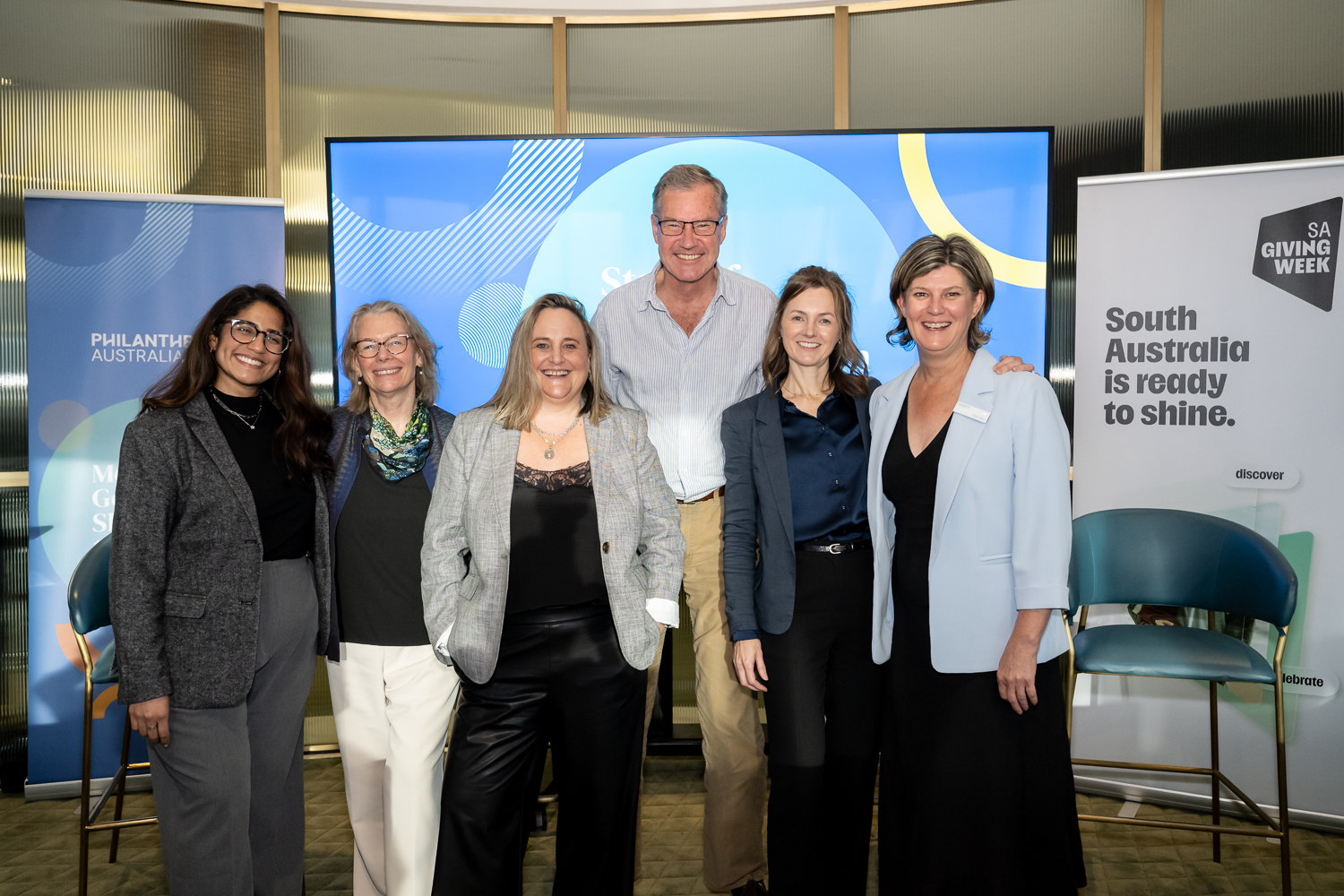
From left to right: Sanya Mirpuri, Heather Grady, Maree Sidey, Darrell Wade, Jodi Farley, Fleur Allen
The series was an opportunity for cross-collaboration on philanthropic learning between the US and Australia. While RPA was able to share its learnings from the US philanthropic space and international philanthropic trends, it also took away insights from Australia’s growing philanthropic sector.
Currently, Australia’s philanthropic landscape is expanding as the country’s wealth increases and its social services are stretched thin. At the same time, the country is experiencing a rise in anti-philanthropic sentiment — something many countries, including the US, are seeing. Given these factors, PA asked RPA to share what we have learned about the role of philanthropy in moments of crisis. This included how federal laws and public and private sector funding shifts can quickly and dramatically affect under-resourced and historically disenfranchised communities as well as broader norms and practices around democracy, equality and justice.
Below are some of the key takeaways from these conversations:
Tall Poppy Syndrome
One phrase reverberated throughout these events – tall poppy syndrome. This phrase refers to the phenomenon of criticizing those who seek prominence. Many note that this derives from Australia’s view of itself as not fiscally wealthy but rather rich in connectedness and care for one another, as seen through its vast social resources. In practice, this causes philanthropists to silence themselves so as not to bring attention to their good fortune.
Tall poppy syndrome sits in direct contrast with philanthropy in the US, where donor names commonly inscribe the walls of buildings. Although American philanthropy can be loud and centered around the individual, such visibility can build excitement in a movement or inspire others to give both independently and collaboratively.
In discussions with philanthropic organizations across Australia, people often expressed the need to be more vocal about giving to facilitate directed support and group learning. Through coalition building, Australia’s philanthropic space has the potential to become more robust and collaborative, impacting those in need on a larger scale. Similarly, US philanthropists could learn from Australia’s approach by centering community members over memorializing or announcing their giving.
Voicing the Existence and Needs of the First Nations
Australia and the US each have painful histories regarding the treatment of Indigenous peoples, known as First Nations in Australia, and the lands they steward. In both countries, colonization displaced, killed, starved, and caused additional harms toward these communities that endure to the present.
In the US, Indigenous communities are chronically underfunded by both government and philanthropy — a problem compounded by the near-absence of Indigenous voices within philanthropic institutions themselves, which further limits their influence over funding decisions and their ability to access resources.
Conversely, Australia’s philanthropic landscape seems to position First Nations’ people at the forefront of recognition and understanding of need. This is not to say that funding and education needs do not exist; however, it is a starting point that the US lags far behind.
Like many other countries, Australia is seeing government support for First Nations rights decline — a shift that makes the work of philanthropic organizations supporting these communities more difficult. To prevent Indigenous culture from being erased and funding barriers from growing, Australia must continue prioritizing First Nations advocacy. The US, meanwhile, can learn from Australia’s example by centering Indigenous voices and ensuring their stories continue to be heard.
Investing in Climate Work
Across Australia, climate change was a key philanthropic interest. Unlike the US, corporate funders are notably invested in the space, and schools actively teach forestry and oceanic research. Many speculate that this is due to Australia’s vast ecosystem, which includes one of the world’s oldest rainforests, deserts, and the Great Barrier Reef.
Many Australians understand the importance of investment to ensure the future sanctity of the land. A great example of this is the University of Tasmania, located in Hobart. This school is the second-best university globally for Marine and Freshwater Biology.
The US has much to learn from Australia’s approach to climate funding, both federal and philanthropic. As American philanthropy builds momentum in this space, closer collaboration with Australian funders and grantees — from ocean conservation to climate justice — could benefit both countries and support the work needed for future generations to thrive.
These three main takeaways from the State of Philanthropy Insight Series are just a few of the many opportunities for learning and growth between the US and Australia.
As Australian philanthropy inevitably grows, the country has an opportunity to shape its approach by learning from other nations’ successes and missteps — while staying true to its own identity. At the same time, RPA encourages US philanthropists to look to Australia for diverse approaches worth considering.
Back to News