
Can’t Wait, Won’t Wait: Dispatches from the Second Annual Artivism Conference
February 20, 2026 - By Grace Anderson, The Lupine Collaborative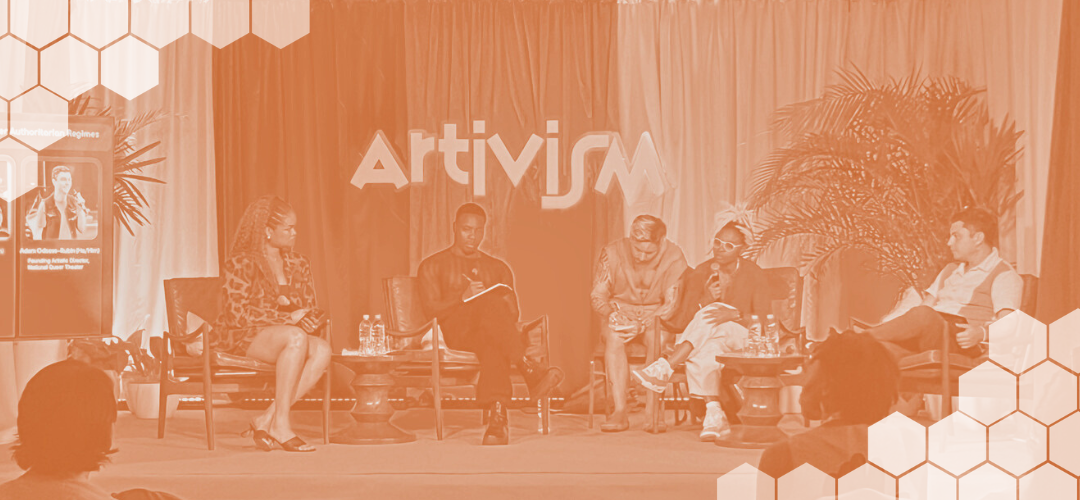
This is the first in a series of blog posts by Shifting Systems Initiative Fellow, Grace Anderson (The Lupine Collaborative), reflecting on Global Artivism — “a movement that makes the case that artists are not side players in social change—they are the center architects of it.” This series intends to highlight how Queer, Black, Indigenous, People of Color, and others on the margins continue to create what their communities need instead of waiting on the systems, including philanthropy, to change.
Located in northeast Brazil, the geographically varied state of Bahia stretches from the Atlantic Ocean to the Cerrado grasslands. Bahia, the epicenter of Afro-Brazilian culture, is largely populated by African people who were enslaved and trafficked to the state by the Portuguese during the Transatlantic Slave Trade. It’s against this backdrop of enslavement, rebellion, and survival that the most vital aspects of Bahia and its coastal capital city, Salvador, exist.
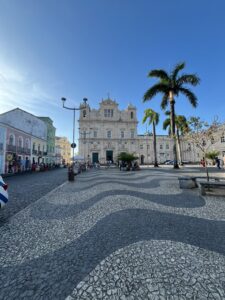
Walking the cobbled roads in Pelourinho, Salvador’s bustling historical center, you are greeted by rows of bright green, yellow, and blue colonial homes, historical churches, and buildings. Pelourinho, notably the site of the city’s slave market, is filled with vendors cooking up street food, drummers, tourists, and locals.
In this center, you are likely to encounter capoeira, a martial arts practice involving dance, music, and spirituality, and Samba de Roda, a type of samba that blends music, dance, and poetry. These two expressive and powerful movement practices were conceived of by African and Afro-Brazilians in resistance to enslavement and control.
This lineage of resistance can also be tasted in Bahia’s most popular street food, acarajé. The handheld snack is a fritter made of Black-eyed pea batter deep-fried in palm oil and stuffed with pepper sauce, braised small shrimp, and vatapá (shrimp stew). According to Eleonora Alves, “acarajé took to the streets when slavery still existed. It was one of the first street foods in Brazil, and an important source of income for women. Its history is more than 300 years old.”
Salvador is resistance, ancestral knowledge, and deep-rooted tradition. It’s the result of people who continue to hold tight to culture, knowledge, and traditions to sustain themselves and those to come. It was on this land, within this history, and among these people and culture, that we gathered for the 2nd annual Global Artivism Conference in November.
“Salvador was chosen very intentionally, ” says Kumi Naidoo, Global Artivism co-founder. “For Global Artivism, place matters. We wanted the convening to happen not in a neutral or sanitized space, but in a city where culture has always been political, where art has long been a tool of survival, resistance, and liberation. Salvador embodies the idea that creativity is not a luxury — it is a lifeline.”
Having attended the inaugural convening in Pretoria, South Africa, in 2024, I imagined that the possibility and momentum harnessed from the first convening would catalyze an even bigger crowd, and it did. Over 1,000 people from Uganda, Palestine, India, Botswana, Kenya, Romania, Italy, Rio de Janeiro, Lebanon, South Africa, Nigeria, Scotland, and many other places converged at the WISH Hotel in Salvador for the largest gathering of artivists in the world.
Co-chaired by Favianna Rodriguez, Louisa Zondo, Edgard Gouveia, Kumi Naidoo, and Mike Fleisch, the international team, backed up by a larger team, a host committee, council members, volunteers, and others, put together a three-day program that boasted over 60 workshops, activities, and performances.
Some highlights:
- “Radical Imagination: A Dream Space for Black Women,” a workshop where Tanisha Hill-Jarrett and Austin James detailed how Black people are unjustly cut from their futures and how they employ Afro-futurism to inspire reclamation, agency, Black liberation, and time. The pair’s photo and interview series, The Other Side of Time, centered on the lived experiences and imagined futures of older Black women from the San Francisco Bay Area
- Poetry as Public Service: Building Civic Voice from Stage to State, a workshop where Theophilus Atuahene Adu, Ghanaian slam poet and member of Ehalakasa, offered a cross-cultural case for poetry as a method of transforming alongside the Salvador-based spoken word collective, Sarau da Onça Collective.
- Movement powerhouses, Viviane Ferreira, president of the Audiovisual Institute Mulheres de Odun (iAMO). Matthew Nwozaku, founder of Obodo Nigeria, Raquel Willis, co-founder of the Gender Liberation Movement, and Adam Odsess-Rubin, founding artistic director of National Queer Theater, came together to share strategies of resistance and persistence in “The Future of Queer Art: Creating Spaces of Liberation Under Authoritarian Regimes.”
- Erika Hilton, the first Black and trans woman elected to the Brazilian Congress, reminded us that violence and discrimination against the LGBTQIA+ community result in violence and discrimination against all in a riveting opening session.
- Brazilian multi-hypenate Puma Camillê, founder of Capoeira Para Todes, hosted an outdoor ball, Bashar Murad, Queer Palestinian performer, gave a dynamic and declarative performance of liberation, and we danced out the day to the drums of Banda Didá, the first all-woman, Afro-Brazilian bateria (percussion band).
The brilliance extended beyond the speakers and performers on stage at the conference; each room was filled with extraordinary organizers, dreamers, painters, comedians, writers, visual artists, singers, sculptors, and muralists.
For many, choosing to gather now, when authoritarianism and fascist governments are ever emboldened to consolidate power and exert control, was no small consideration.
Many in attendance live under the constant and increasingly violent monitoring of their movement and bodies, and their attendance demanded a particular bravery. Critical to extending authoritarian reign is suppressing and silencing artists because of artists’ mandate to examine reality and tell the truth, even in the face of grave danger. Yet, these artists came together to hold the line and refuse to bow.
I want to tell you about those I met at the Global Artivism Conference. The artists who embody the revolutionary and rebellious spirit of Salvador. Over the next few months, I will introduce you to people from around the globe who are not waiting and cannot wait for the conditions to change. Instead, they are changing the conditions for themselves, their people, and for all of us.
Sources:
- How Brazilian Capoeira Evolved From a Martial Art to an International Dance Craze
- Brazil’s unsung ‘capital of happiness’
- From Africa to Brazil: a food history
- Musical Style and History of Samba de Roda
Photo captions (in order of appearance):
- Panel “The Future of Queer Art: Creating Spaces of Liberation Under Authoritarian Regimes.”– From L to R, Raquel Willis, Matthew Nwozaku, a translator, Viviane Ferreira, and Adam Odsess-Rubin.
- Snapshot of Pelourinho by the author
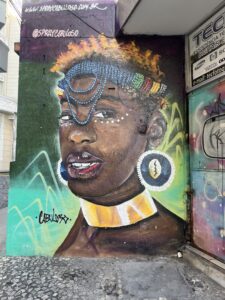
- Mural by Kate Morales featured in the workshop “Radical Imagination: A Dream Space for Black Women.”
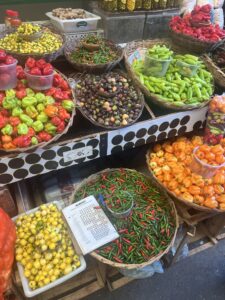
- Snapshot of ingredients at a local market by the author