
From the Road to the Screen: How Joie Lou Built a Home for Black Trans Filmmakers
April 15, 2026 - By Grace Anderson, The Lupine Collaborative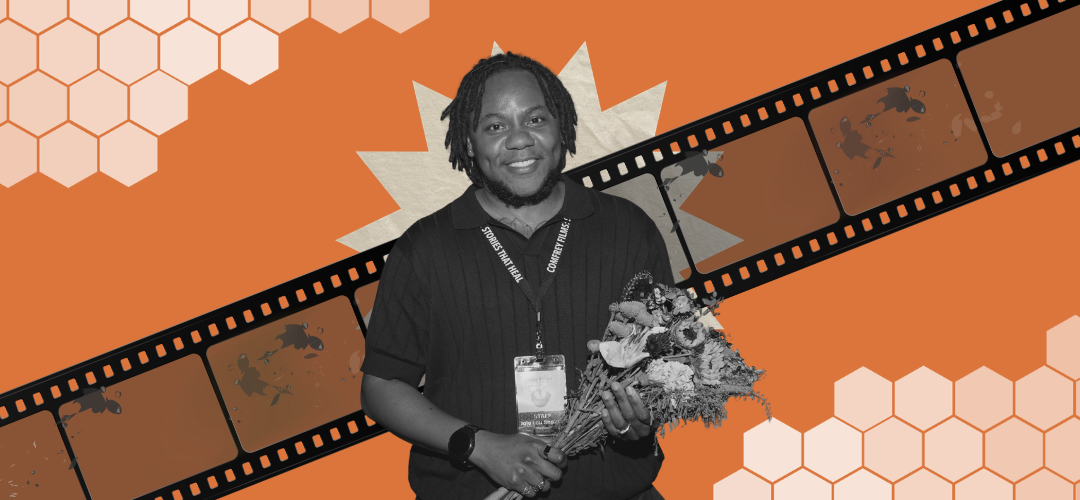
This is the second in a series of blog posts by Shifting Systems Initiative Fellow, Grace Anderson (The Lupine Collaborative), reflecting on Global Artivism — “a movement that makes the case that artists are not side players in social change—they are the center architects of it.” This series intends to highlight how Queer, Black, Indigenous, People of Color, and others on the margins continue to create what their communities need instead of waiting on the systems, including philanthropy, to change.
In 2017, Joie Lou embarked on a road trip that defined their calling to shepherd stories from often-overlooked communities into the world.
A Black trans immigrant from Jamaica, Joie Lou had initially joined a group of filmmakers that intended to support Black trans people as they came out to their families. With the project, they hoped to create a necessary tool and alleviate some of the emotional and educational burden inherent in the process of coming out. So, when the initial subjects fell through, Joie Lou decided to hit the road to document their own story.
Joie Lou put out a call to their community for filmmaking equipment and rented a van to drive 500-plus miles from Durham, North Carolina, to their mom’s home in the Bronx, New York. As Joie Lou drove, they picked up other Black trans folks who had heard about the trip and were interested in learning filmmaking. For many, it was the first time they had been around this many other Black trans people at once. In the familiarity of shared identity, an unshakeable camaraderie was formed.
The group had grown to six when they finally arrived at Joie Lou’s mom’s house and were welcomed with her cooking. In Mama Can We Talk, the film that was eventually made from the trip, the newly formed group mills about the house setting up tripods, cameras, and other equipment to capture the conversation between mother and child.
The opportunity to document such a tender and often alienating experience surrounded by community was instructive. Driving back to Durham, Joie Lou understood that they needed to create a world where Black trans people could use film to document and tell their stories on their own terms. Later the same year, they founded House of Pentacles, now known as Comfrey Films, a film training program and production studio designed to launch Black Transgender, Gender Non-Conforming, and Intersex (TGNCI*) storytellers into independent filmmaking, while telling stories woven at the intersection of being Black and TGNCI*.
My work in film is a lot around resourcing and supporting the next generation of Black trans filmmakers and storytellers and making the modern Black trans people unforgettable through archive and multimedia art.
Joie Lou has their eyes on the future while also reaching back to tell the stories of Black trans people who have been historically erased. In their forthcoming film Reconstructing Frances, Joie Lou and Mickaela Bradford tell the story of Frances Thompson, a formerly enslaved Black trans woman. Thompson’s 1866 Congressional testimony on the Memphis massacre of 1866 became a foundational record of American history and made her the first Black trans woman to testify before the United States Congress.
Through the film, the duo hopes to “exhale life into her erasure, the film confronts the systemic myths fueling modern violence against trans communities.”
This intention is multiplied through Comfrey Films’ annual Black Trans Short Film Festival, which ensures that TGNCI* people are unforgettable for generations to come. To date, Comfrey Film has built an archive of 60 films directed, written, and produced by Black trans people. “We are documenting our people now to make sure future generations never forget that we were here.”
photo credit: Texas Isaiah
In the opening scene of Mama Can We Talk, Joie Lou is seated on the floor surrounded by three Black trans people. Joie Lou’s deep dimples are on full display as they go back and forth between laughing and chatting with their friends and staring pensively at the floor.
The scene seems to perfectly capture what Joie Lou seeks to do through Comfrey Films. Using filmmaking as a medium, Comfrey Films fortifies Joie Lou and other Black trans people by building a community that affirms them as they carry out the work of resisting and demanding belonging in the world. Like its namesake, the comfrey plant, Comfrey Films applies salve on the wounds of abandonment and erasure that the Black trans community experiences.
Joie Lou’s clarity is unwavering. They are moving with a clear directive: remain unbowed in a world that attempts to erase them. With Comfrey Films, Joie Lou created what they needed, something for themselves and future generations to hold onto.
To learn more about Comfrey Films, visit comfreyfilms.org. To learn more about the Black Trans Short Film Festival, including sponsorship opportunities, visit comfreyfilms.org/festival.
Back to News